Writing and city Life Class 11 History MCQ
Q 1 – Consider the following statements regarding the geographical divisions of Mesopotamia:
1. The north-east consists of undulating plains rising to tree-covered mountain ranges with sufficient rainfall for agriculture.
2. The steppe in the north provided an upland where animal herding offered a better livelihood than farming.
3. The desert in the south was incapable of supporting cities due to a complete lack of water and agricultural yield.
Which of the statements given above is/are correct?
(A) 1 and 2 only
(B) 2 and 3 only
(C) 1 and 3 only
(D) 1, 2, and 3
(A) 1 and 2 only
Explanation: Statements 1 and 2 are correct. Statement 3 is incorrect because the southern desert supported the earliest cities through irrigation canals fed by the Euphrates and Tigris rivers, achieving the most productive agriculture in the ancient world.
Q 2 – Why was the agriculture of southern Mesopotamia the most productive of all ancient systems despite the lack of sufficient rainfall?
(A) The region relied exclusively on seasonal monsoon rains.
(B) The Euphrates and Tigris deposited fertile silt during seasonal floods, and natural channels functioned as irrigation canals.
(C) Early Mesopotamians imported synthetic fertilizers from neighbouring mountain regions.
(D) Underground water tables were artificially raised using iron water pumps.
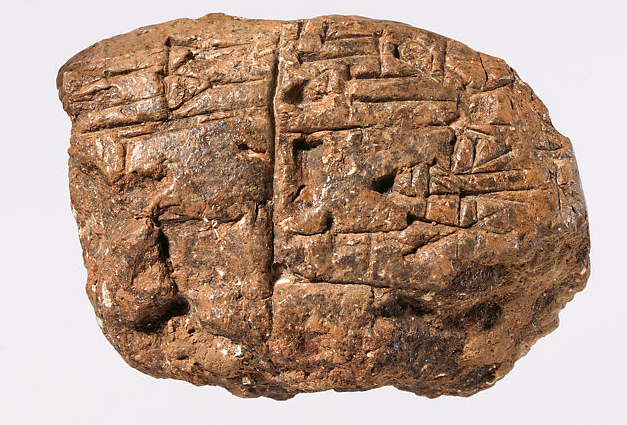
(B) The Euphrates and Tigris deposited fertile silt during seasonal floods, and natural channels functioned as irrigation canals
Explanation: The rivers Euphrates and Tigris carried loads of silt from northern mountains. When they flooded or when water was let into fields through natural channels, fertile silt was deposited, making farming exceptionally productive
Q 3 – Which of the following best explains why water transport was essential for the survival of large Mesopotamian city economies compared to overland transport?
(A) Pack animals were forbidden from entering city gates due to religious laws. (B) Overland transport using pack animals required feeding the animals grain, significantly raising feed costs, whereas boats were propelled cheaply by wind or river currents.
(C) Wheeled carts were unavailable in West Asia until the first century CE.
(D) River routes were completely free from taxation and customs duties.
(B) Overland transport using pack animals required feeding the animals grain, significantly raising feed costs, whereas boats were propelled cheaply by wind or river currents
Explanation: Carrying bulky items like grain into cities on pack animals or bullock carts consumed time and expensive animal feed. Watercraft moved with currents or wind, making water transport the cheapest mode for sustaining urban trade
Q 4 –Arrange the following historical and archaeological events in chronological order:
1. Beginning of agriculture in the northern Mesopotamian plains.
2. Establishment of earliest known shrines/temples in southern Mesopotamia.
3. Emergence of Uruk as a huge urban centre.
4. Decipherment of the cuneiform script.
(A) 1 — 2 — 3 — 4
Explanation: Agriculture began c. 7000–6000 BCE. Earliest temples were built c. 5000 BCE. Uruk developed into a major city c. 3000 BCE. Cuneiform script was deciphered in the 1850s
Q 5 – Why was Mesopotamia of special significance to 19th-century European scholars and travellers?
(A) European monarchies claimed direct dynastic lineage from Sargon of Akkad.
(B) References in the Old Testament, such as ‘Shimar’ (Sumer), prompted attempts to prove the literal truth of Biblical stories.
(C) Cuneiform tablets contained the earliest known Latin translations of European folklore.
(D) The Roman Empire originated directly from southern Mesopotamian military colonies.
(B) References in the Old Testament, such as ‘Shimar’ (Sumer), prompted attempts to prove the literal truth of Biblical stories
Explanation: Europeans viewed Mesopotamia as an ancestral land because of Old Testament references to Sumer (‘Shimar’). Early archaeological excavations aimed to verify Biblical narratives such as the Flood story.
Q 6 – Read the statements regarding flood myths in ancient traditions:
- Statement I: In the Old Testament, Noah built an ark to preserve life during a flood sent by God.
- Statement II: In Mesopotamian tradition, the principal character who survived the flood was named Ziusudra or Utnapishtim.
- (C) Both Statement I and Statement II are true, and Statement II reflects a similar Mesopotamian tradition
- Explanation: Both statements accurately reflect the comparative flood legends preserved in Biblical and Mesopotamian literature
Q 7 – How did archaeological techniques in Mesopotamia evolve from the 19th century to modern projects like those at Tell Abu Salabikh?
(A) Modern excavations focus exclusively on digging deep trenches to uncover gold items.
(B) Archaeologists shifted from large-scale digging aimed at verifying Biblical literalism to micro-archaeological techniques (surface scraping, soil sieving, floor deposits analysis) to understand daily life.
(C) Modern archaeologists rely entirely on satellite imagery and no longer dig on site.
(D) Recent excavations focus only on royal palaces and ignore common residential areas.
- (B) Archaeologists shifted from large-scale digging aimed at verifying Biblical literalism to micro-archaeological techniques (surface scraping, soil sieving, floor deposits analysis) to understand daily life.
- Explanation: Modern archaeologists dig smaller areas with extreme care, sieving soil for seeds and micro-remains to reconstruct the domestic lives of ordinary citizens.
Q 8 – How could an archaeologist excavating an ancient Mesopotamian settlement visually distinguish an early temple from an ordinary residential house?
(A) Temples were built exclusively using imported white marble.
(B) Temples had outer walls that went in and out at regular intervals.
(C) Ordinary houses lacked courtyards, whereas temples consisted only of courtyards.
(D) Temples were always constructed with metal roofs supported by wooden pillars.
(B) Temples had outer walls that went in and out at regular intervals
Explanation: Early temples were constructed of unbaked bricks and resembled ordinary houses, but they were distinguished by outer walls stepping in and out at regular intervals.
Q 9 – According to NCERT, what is the defining characteristic of an urban economy?
(A) High population density sustained purely by subsistence farming.
(B) Economic development in spheres beyond food production, such as trade, manufacturing, and division of labour.
(C) Absolute self-sufficiency of every household within the city walls.
(D) Complete absence of social hierarchy and centralized commands
(B) Economic development in spheres beyond food production, such as trade, manufacturing, and division of labour
Explanation: Cities emerge when economies diversify into trade, crafts, and services, making city dwellers interdependent rather than self-sufficient.
Q 10 – A Mesopotamian stone seal carver requires bronze tools from a smith, coloured stones from distant traders, and charcoal fuel supplied by others. This scenario illustrates:
(A) The absolute failure of urban specialization.
(B) Division of labour and organized social coordination in urban life.
(C) The lack of trade networks in southern Mesopotamia.
(D) That seal carvers were compulsory state slaves.
(B) Division of labour and organized social coordination in urban life
Explanation: Specialization requires network coordination: a seal carver focuses on carving while depending on others for metals, fuel, and raw stones
Q 11 – What were the primary exports and imports of southern Mesopotamia in its long-distance trade with Turkey, Iran, and the Gulf ?
(A) Exported gold and copper; imported textiles and grain.
(B) Exported abundant textiles and agricultural produce; imported wood, copper, tin, silver, gold, and stones.
(C) Exported bronze tools; imported barley and dates.
(D) Exported white marble sculptures; imported mud bricks.
(B) Exported abundant textiles and agricultural produce; imported wood, copper, tin, silver, gold, and stones
Explanation: Southern Mesopotamia was rich in food and textiles but lacked minerals, metals, and quality timber, trading its agricultural surplus for foreign raw materials.
Q 12 – The ‘Warka Head’ (sculpted at Uruk before 3000 BCE) represents a major artistic landmark. Which feature highlights the complex urban trade networks of the period?
(A) It was carved in cheap local mud brick and painted.
(B) It was sculpted in white marble with inlays of imported lapis lazuli, shell, and bitumen.
(C) It was cast in pure iron imported from Europe.
(D) It was signed by an artisan from Egypt.
(B) It was sculpted in white marble with inlays of imported lapis lazuli, shell, and bitumen
Explanation: White marble and lapis lazuli were not naturally found in southern Mesopotamia; procuring these materials required long-distance trade coordination.
Q 13 – Consider the following statements regarding Mesopotamian cylinder seals:
1. They were stone cylinders carved by skilled craftsmen, pierced down the centre, and rolled over wet clay.
2. A seal impression on a clay-covered knot or tablet acted as a mark of authenticity and ownership.
3. Cylinder seals were stamped flat onto clay, exactly like early Indian stone seals.
(A) 1 and 2 only
Explanation: Statements 1 and 2 are correct. Statement 3 is false because early Indian seals were stamped flat, whereas Mesopotamian seals were cylindrical and rolled across moist clay.
Q 14 – Arrange the following technological and administrative innovations in correct chronological sequence:
1. Creation of earliest clay tablets with picture-like signs.
2. Widespread use of bronze tools in Uruk.
3. Beginning of the use of iron in West Asia.
4. Compilation of complex mathematical tablets.
(A) 1 — 2 — 4 — 3
Explanation: First writing appears c. 3200 BCE. Bronze tools became widespread c. 3000 BCE. Mathematical texts were compiled c. 1800 BCE. Iron usage began c. 1000 BCE.
Q 15 – Why was bronze of strategic and economic importance in early Mesopotamian cities?
(A) Bronze was easy to extract without long-distance trade.
(B) As an alloy of copper and tin, bronze provided hard metal tools for carpentry, stone carving, bead drilling, and military weapons.
(C) Bronze was used exclusively for royal coins.
(D) It replaced mud bricks as the primary building material for temples.
(B) As an alloy of copper and tin, bronze provided hard metal tools for carpentry, stone carving, bead drilling, and military weapons
Explanation: Metal tools made of bronze were essential for specialized urban crafts and military armament.
Q 16 – Why is the introduction of the potter’s wheel considered a technological landmark appropriate to an urban economy?
(A) It eliminated the need for clay in making pottery.
(B) It enabled a single craftsman’s workshop to mass-produce dozens of uniform pots efficiently.
(C) It was used to transport grain over long distances.
(D) It allowed scribes to press cuneiform letters onto moving pots.
(B) It enabled a single craftsman’s workshop to mass-produce dozens of uniform pots efficiently
Explanation: The potter’s wheel allowed mass production of containers required for storing and distributing goods in growing cities.
Q 17 – Why were Mesopotamian written records recorded on hundreds of individual clay tablets rather than long continuous scrolls?
(A) Reeds could only write five words at a time.
(B) Once a clay tablet dried in the sun, no additional signs could be pressed onto it; thus, every new transaction required a separate tablet.
(C) Kings ordered old tablets to be destroyed every year.
(D) Dried clay tablets dissolved immediately when touched.
(B) Once a clay tablet dried in the sun, no additional signs could be pressed onto it; thus, every new transaction required a separate tablet
Explanation: Scribes pressed wedge-shaped signs into moist clay. Once dry, the surface hardened, so each separate transaction required its own moist clay tablet.
Q 18 – The word ‘Cuneiform’ is derived from which Latin words and meanings?
(A) Cuneus (‘wedge’) and forma (‘shape’).
(B) Circus (‘circle’) and forma (‘border’)
(C) Centum (‘hundred’) and forma (‘letter’).
(D) Civitas (‘city’) and forma (‘structure’).
(A) Cuneus (‘wedge’) and forma (‘shape’)
Explanation: Cuneiform signs were pressed with a reed cut obliquely, creating wedge-shaped impressions (cuneus = wedge, forma = shape).
Q 19 – Which of the following statements about the Mesopotamian system of writing is/are correct?
1. Cuneiform signs represented individual vowels or consonants like ‘m’ or ‘a’.
2. A cuneiform sign represented full spoken syllables such as ‘-put-‘, ‘-la-‘, or ‘-in-‘.
3. Scribes had to memorize hundreds of signs and handle moist clay quickly before it dried.
(B) 2 and 3 only
Explanation: Statement 1 is false because cuneiform was a syllabic script, not an alphabetic script. Statements 2 and 3 accurately describe the complexity and mechanics of cuneiform writing.
Q 20 – In the Sumerian epic poem, why did Enmerkar, the ruler of Uruk, invent clay tablet writing?
(A) To record mathematical square roots for temple builders.
(B) Because his messenger grew ‘weary of mouth’ and mixed up long oral messages demanding lapis lazuli and silver from Aratta.
(C) To create a public dictionary for foreign merchants.
(D) To write down customary laws regarding land inheritance.
(B) Because his messenger grew ‘weary of mouth’ and mixed up long oral messages demanding lapis lazuli and silver from Aratta
Explanation: When the messenger became fatigued and confused the verbal commands during repeated mountain crossings, Enmerkar formed a clay tablet and wrote the words down.
Q 21 – Consider the following statements regarding literacy in Mesopotamia:
- Statement I: Literacy was widespread among ordinary herdsmen and farmers.
- Statement II: Letters from officials were typically read aloud to the king by trained scribes.
(B) Statement I is incorrect, but Statement II is correct
Explanation: Literacy was low because scribes had to memorize hundreds of complex syllabic signs. Letters were read aloud to recipients, opening with formulas like: “To my lord A, speak: Thus says your servant B…”.
Q 22 – Arrange the primary languages of Mesopotamia in the order in which they became dominant:
1. Akkadian
2. Sumerian
3. Aramaic
(A) 2 — 1 — 3
Explanation: Sumerian was the earliest known language. Akkadian replaced Sumerian c. 2400 BCE. Aramaic trickled in c. 1400 BCE and became widely spoken after 1000 BCE.
Q 23 – By 2600 BCE, writing expanded beyond simple temple transaction lists to perform which of the following social functions?
(A) Publishing daily newspapers for town residents.
(B) Giving legal validity to land transfers, narrating royal deeds, and announcing royal legal changes.
(C) Broadcasting radio announcements across Syria and Turkey.
(D) Replacing all spoken languages with silent sign language.
(B) Giving legal validity to land transfers, narrating royal deeds, and announcing royal legal changes
Explanation: As urban institutions expanded, cuneiform writing became a instrument for legal administration and state codification.
Q 24 – How did early southern Mesopotamian temples evolve into the main urban institutions of early cities? (A) They served purely as military fortresses during war.
(B) They became centers for processing produce (oil pressing, grain grinding, weaving), employing merchants, and keeping distribution records.
(C) They functioned as isolated mountain hermitages away from human settlement.
(D) They were built exclusively to store imported metals.
(B) They became centers for processing produce (oil pressing, grain grinding, weaving), employing merchants, and keeping distribution records
Explanation: Over time, temples organized economic production above the household level, acting as central institutions for redistribution and record-keeping.
Q 25 – How did repeated local warfare over land and water lead to the institutionalization of permanent kingship?
(A) Defeated chiefs automatically became high priests.
(B) Victorious war leaders consolidated clout by distributing loot, taking war prisoners as guards/servants, and offering booty to beautify community temples.
(C) Kingship was established by foreign nomadic peaceful traders.
(D) Water supply was controlled exclusively by peaceful town councils.
(B) Victorious war leaders consolidated clout by distributing loot, taking war prisoners as guards/servants, and offering booty to beautify community temples
Explanation: Successful war leaders transformed temporary military leadership into permanent authority by institutionalizing temple wealth, employing guards, and settling followers nearby.
Q 26 – Read the following statements regarding the growth of Uruk around 3000 BCE:
1. Uruk expanded to an extent of 250 hectares, making it twice as large as Mohenjo-daro in later centuries.
2. Dozens of small surrounding villages were deserted due to state-encouraged population concentration.
3. Uruk lacked any defensive walls throughout its history.
(A) 1 and 2 only
Explanation: Statements 1 and 2 are correct. Statement 3 is incorrect because Uruk came to have a major defensive wall at an early date.
Q 27 – How did Mesopotamian rulers mobilize labour for major state projects like building temples or city walls?
(A) By imposing a heavy cash tax paid in silver coins.
(B) Through compulsory labor paid with allocated rations of grain, oil, or cloth.
(C) By employing only foreign mercenaries.
(D) By relying entirely on voluntary weekend donations.
(B) Through compulsory labor paid with allocated rations of grain, oil, or cloth
Explanation: War captives and local citizens were obliged to work for the temple or ruler, receiving standard rations as evidenced by hundreds of excavated ration lists.
Q 28 – Excavations at Ur revealed narrow, winding streets and irregular house plots. What do these archaeological features indicate?
(A) Advanced grid-pattern street planning similar to Mohenjo-daro.
(B) Absence of overall town planning and an inability of wheeled carts to reach houses, requiring donkeys for transport.
(C) That houses were built exclusively for royal guards.
(D) That Ur was destroyed by a volcanic eruption.
(B) Absence of overall town planning and an inability of wheeled carts to reach houses, requiring donkeys for transport
Explanation: Winding streets and irregular plots show a lack of town planning, meaning goods like grain had to be carried to houses on donkey-back.
Q 29 – Fill in the blanks
1. When we talk about writing or a script, we mean that spoken sounds are represented in …………….
2. Regular exchanges are possible only when there was a …………….
4. The writing used in Mesopotamian civilizations was in …………….
5. Ivanna was the goddess of ……………..
6. Mesopotamian country side saw repeated …………….. over land and water.
7. In the long run, the wheel enables ……………… to mass produce.
8. In Mesopotamia, cylindrical stone seals pierced down the centre were fitted with a ………………
9. Nomadic communities viz …………….. and Aramaeans came down into prosperous agricultural land to graze their cattle.
10. Moving narratives can be transmitted orally but …………….. requires written texts that generations of scholars can read and build upon.
1. Visible signs
2. Social organization
3. oxen, fish and bread loaves
4. Cuneiform
5. love and war
6. conflicts
7. a potter’s workshop
8. stick
9. Akkadians, Amorites, Assyrians
10. science
Q 30 – Write false or true:
1. Iraqi date-palm and poplar was the best suitable for manufacture of carts, cart wheels and boats.
2. The first Mesopotamian tablets written around 3200 BCE contained picture like signs and numbers.
3. An organized trade and storage is needed in order to supply raw material to the manufacturing industries
4. Enmerkar was interested in getting lapis lazuli and precious metals imported from Aratia.
5. It can not be inferred that in Mesopotamia, it was kingship that organized the trade and writing.
6. Temples were the first structures which gradually inspired Mesopotamian to settle in city and construct palaces as we see in Mari, the capital town.
7. The palace at Mari was spread on an area of 61.8 hectares.
1. False
2. True
3. True
4. True
5. False
6. True
7. False
Q 31 – Match the following columns appropriately:
| Column A | Column B |
| (i) 1st Century CE | (a) Cuneiform script developed |
| (ii) 2370 BCE | (b) Mari and Babylon emerged as Urban Centres |
| (iii) 3000 BCE | (c) First written clay tablet |
| (iv) 7000 – 6000 BCE | (d) Sumerian replaced by Akkadian |
| (v) 1850 | (e) Earliest temple built. |
| (vi) 2600 BCE | (f) Akkadian and Cuneiform script remain in use. |
| (vii) 3200 BCE | (g) Cunieform script deciphered |
| (viii) 5000 BCE | (h) Sargon, king of Akkad |
| (ix) 2400 BCE | (i) Beginning of agriculture |
| (x) 2000 BCE | (j) Uruk developed into a huge city |
| Column A | Column B |
| (i) 1st Century CE | (f) Akkadian and Cuneiform script remain in use. |
| (ii) 2370 BCE | (h) Sargon, king of Akkad |
| (iii) 3000 BCE | (j) Uruk developed into a huge city |
| (iv) 7000 – 6000 BCE | (i) Beginning of agriculture |
| (v) 1850 | (g) Cunieform script deciphered |
| (vi) 2600 BCE | (a) Cuneiform script developed |
| (vii) 3200 BCE | (c) First written clay tablet |
| (viii) 5000 BCE | (e) Earliest temple built. |
| (ix) 2400 BCE | (d) Sumerian replaced by Akkadian |
| (x) 2000 BCE | (b) Mari and Babylon emerged as Urban Centres |