New Science Book Cell: The Building Block of Life Class 9 Biology Revision Notes

Discovery, Cell Theory & Microscopy

The Origin & Cell Theory

  • Life likely originated in water, potentially in hot springs similar to where modern thermophilic bacteria thrive.

  • Robert Hooke first observed and named “cells” in 1665 using a slice of cork.

  • The Cell Theory: Formulated by Schleiden (1838) and Schwann (1839), and expanded by Virchow (1855). It states: All living things are made of cells, the cell is the basic structural unit, and all cells arise from pre-existing cells.

Microscopy & Resolution

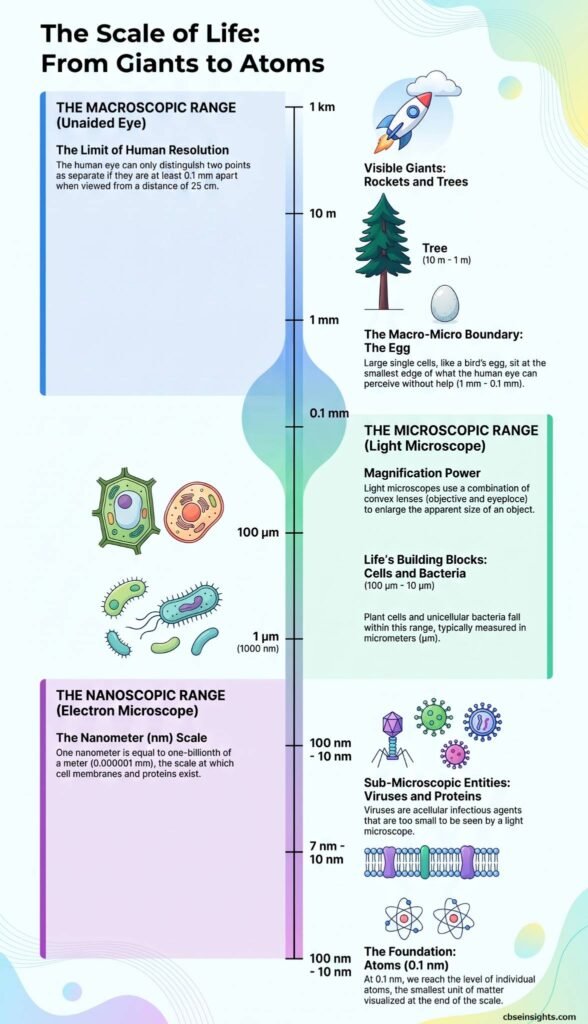
  • Human Eye: Limit of resolution is 0.1 mm (viewed from 25 cm).

  • Light/Electron Microscopes: Light microscopes use lenses to magnify. Electron microscopes use electron beams to reveal structures at the nanometre scale (1 nm = one-billionth of a metre).

Cell Boundaries & Osmosis

The Plasma Membrane & Cell Wall

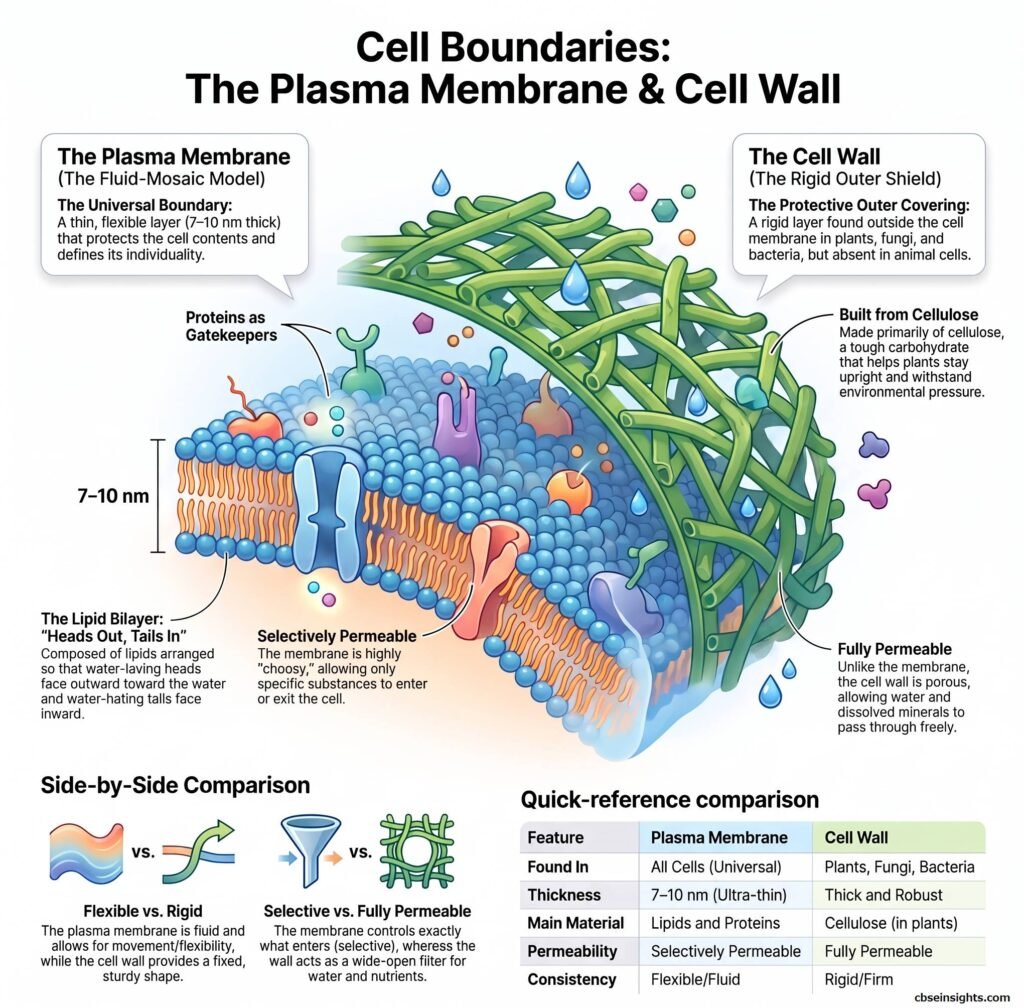
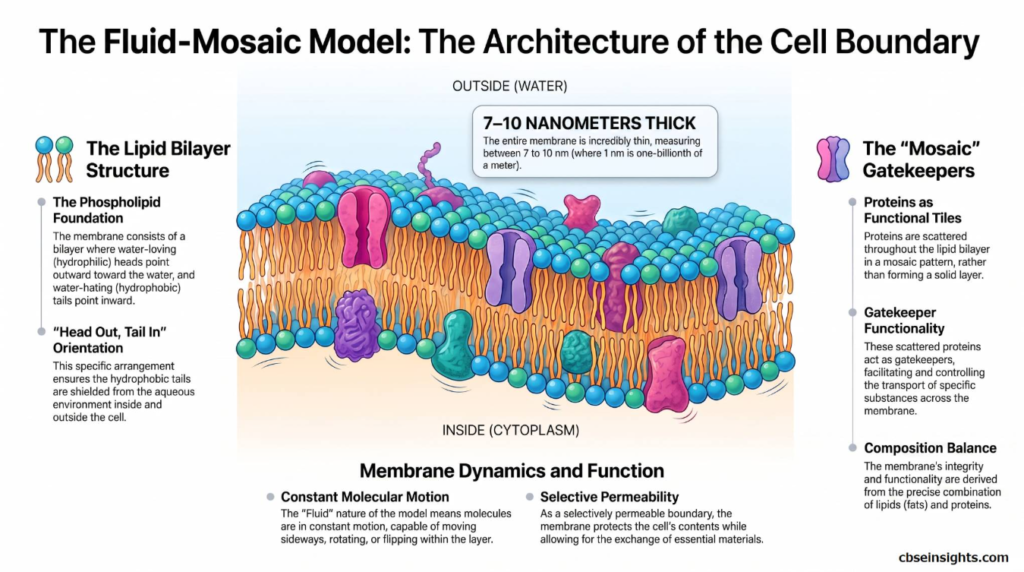
  • Cell Membrane: A 7-10 nm thick, selectively permeable boundary. The Fluid-Mosaic Model describes it as a lipid bilayer embedded with mobile transport proteins.

  • Cell Wall: A rigid layer outside the membrane found in plants (cellulose), fungi, and bacteria. It provides support and prevents bursting.

Diffusion & Osmosis

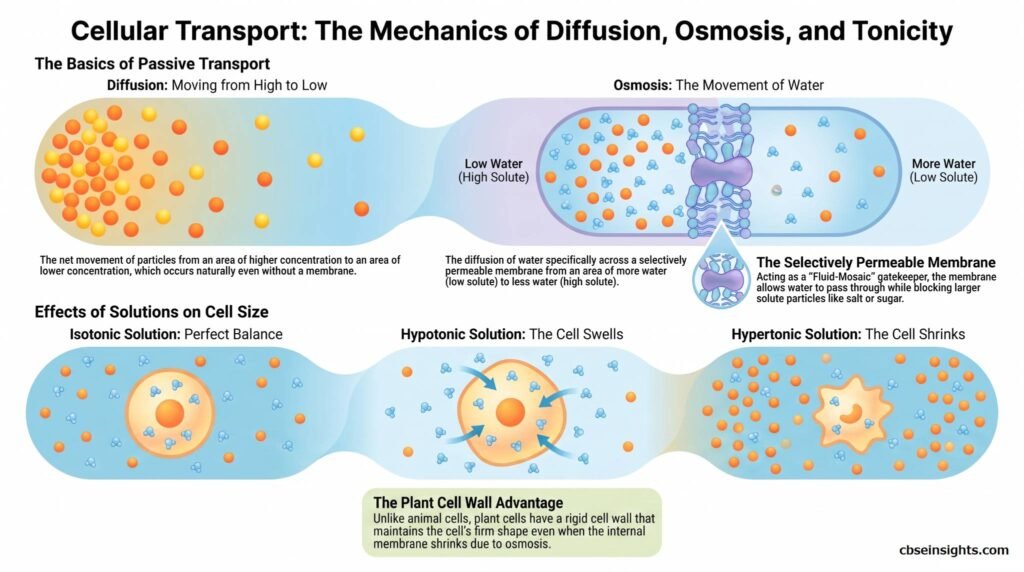
  • Diffusion: Movement of particles from higher to lower concentration.

  • Osmosis: Diffusion of water across a selectively permeable membrane.

Fluid-Mosaic Membrane Model

  • Top Layer: Hydrophilic Heads (Attract water)

  • Middle Layer: Hydrophobic Tails (Repel water)

  • Embedded: Large Protein Channels (Gatekeepers)

  • Bottom Layer: Hydrophilic Heads (Attract water)

Osmosis Effects on Cell

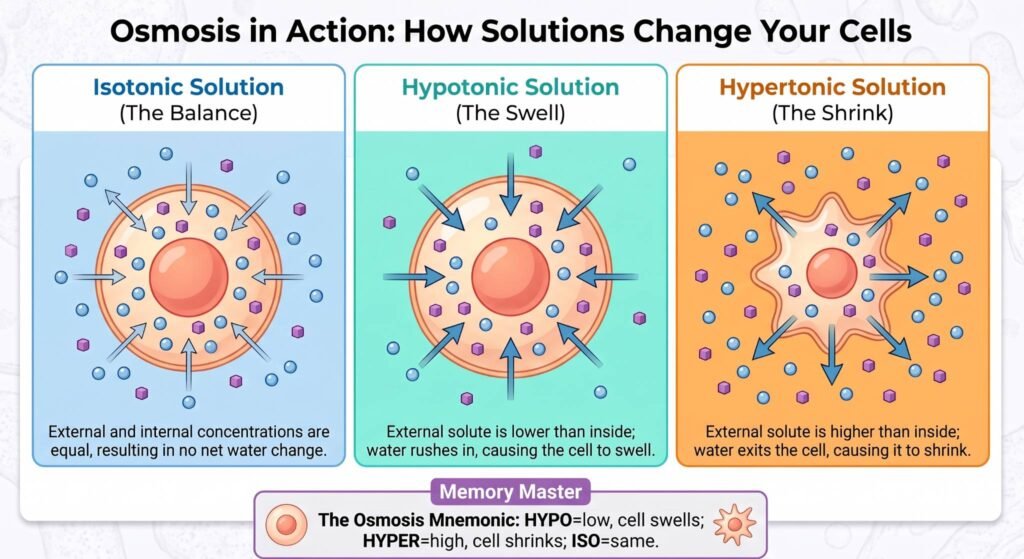
  • ISOTONIC: Equal solute inside and outside ➔ No size change.

  • HYPOTONIC: Lower solute outside ➔ Water enters ➔ Cell swells.

  • HYPERTONIC: Higher solute outside ➔ Water leaves ➔ Cell shrinks.

Cell Types & The Control Center

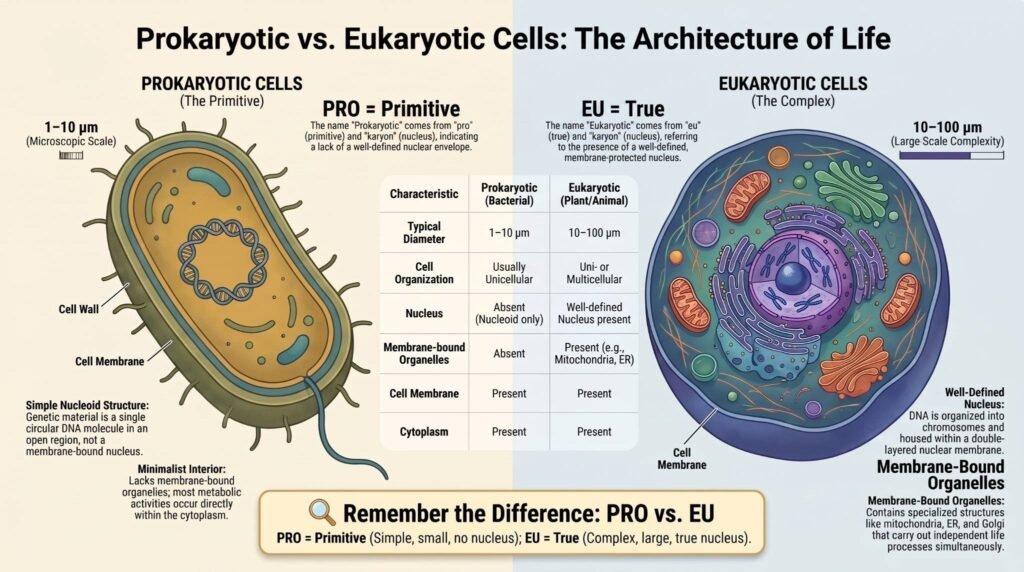
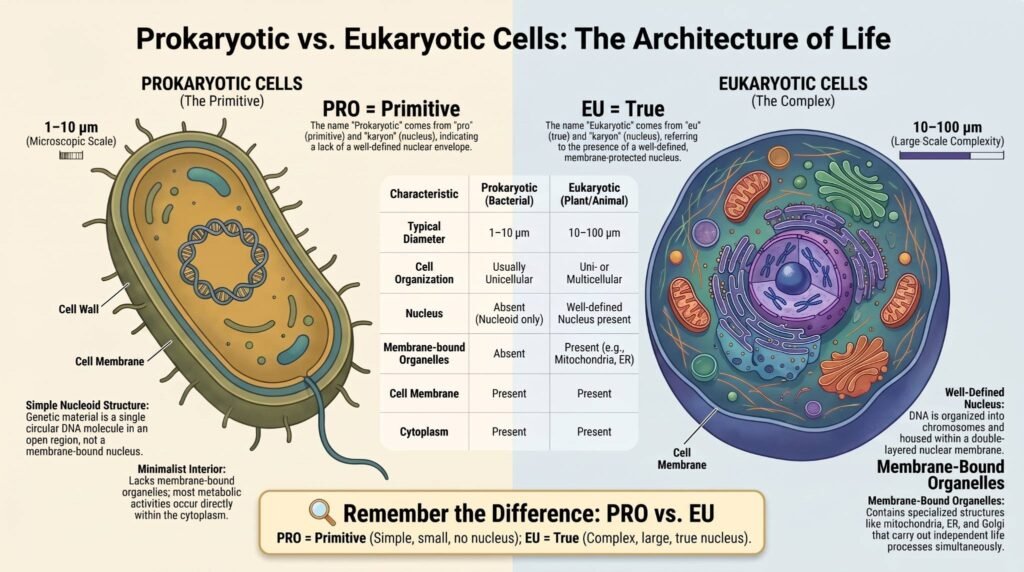
Prokaryotic vs. Eukaryotic Cells

  • Prokaryotes (1-10 µm): Unicellular. Lack membrane-bound organelles; genetic material is loose in the nucleoid.

  • Eukaryotes (10-100 µm): Unicellular or multicellular. Possess a membrane-bound nucleus and specialized organelles.

The Nucleus (Control Center)

  • Surrounded by a double-layered nuclear membrane with pores.

  • Contains the nucleolus (synthesizes ribosomes).

  • Houses DNA: As tangled chromatin when resting, or condensed chromosomes when dividing.
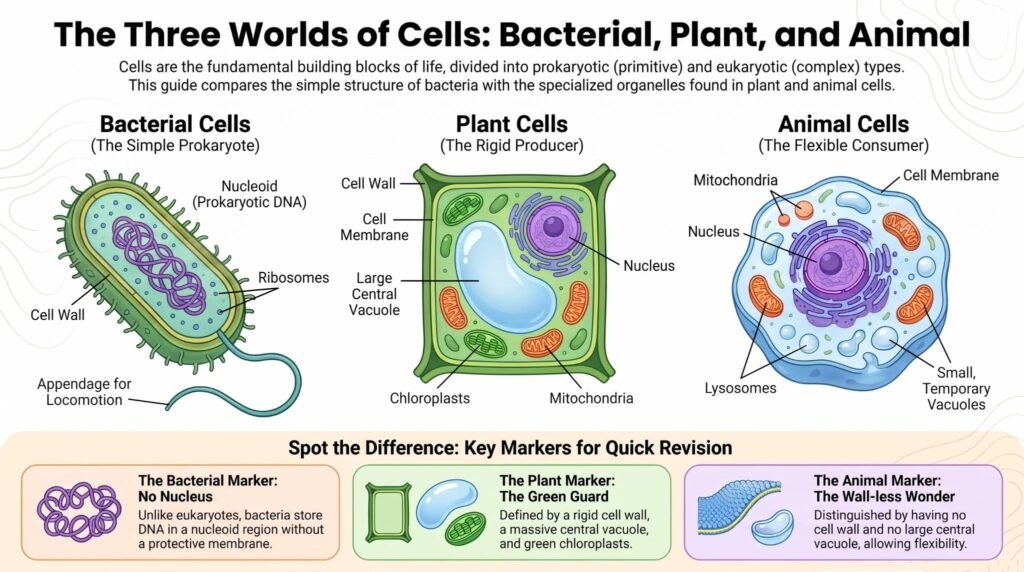
Cell Types Overview

  • Prokaryote (Bacteria): Outer cell wall ➔ Floating Ribosomes ➔ Free-floating Nucleoid ➔ Tail (Appendage).

  • Eukaryote (Plant/Animal): Cell membrane ➔ Well-defined Nucleus ➔ Mitochondria ➔ Endoplasmic Reticulum.

Nucleus to DNA Pathway

Nucleolus (Dark center) ➔ Surrounded by Chromatin (Fuzzy threads) ➔ Condenses into Chromosomes (X-shape) ➔ Unravels into DNA (Double helix).

The Endomembrane System

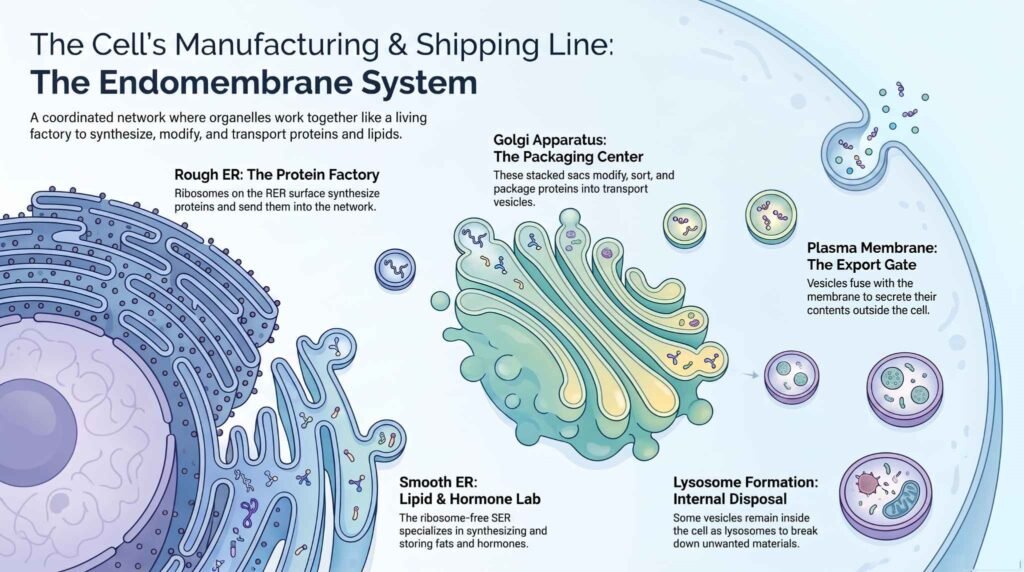
Endoplasmic Reticulum (ER)

  • A membrane network continuous with the nucleus.

  • Rough ER (RER): Studded with ribosomes; synthesizes/secretes proteins.

  • Smooth ER (SER): Lacks ribosomes; synthesizes lipids and hormones.

Golgi Apparatus & Lysosomes

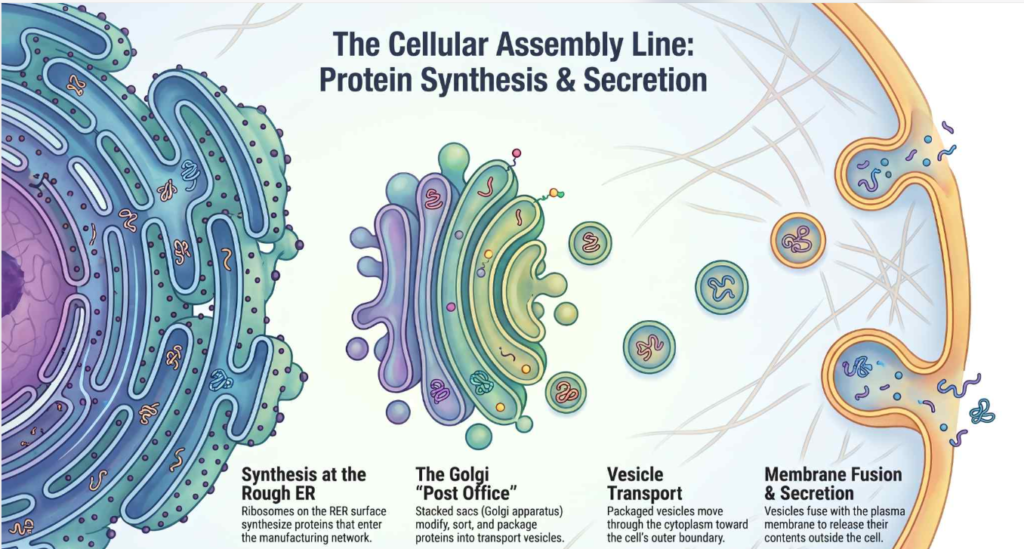
  • Golgi Apparatus: Flattened sacs that modify, sort, and package ER products into vesicles.

  • Lysosomes: The cellular clean-up system; sacs of digestive enzymes that break down waste.

Protein Processing Pathway

1. Nucleus: Sends instructions.

2. Rough ER: Ribosomes synthesize proteins.

3. Golgi Apparatus: Modifies, sorts, and packages the proteins.

4. Vesicles: Transport the final products to the Cell Membrane.

Energy, Synthesis & Storage

Mitochondria (The Powerhouse)

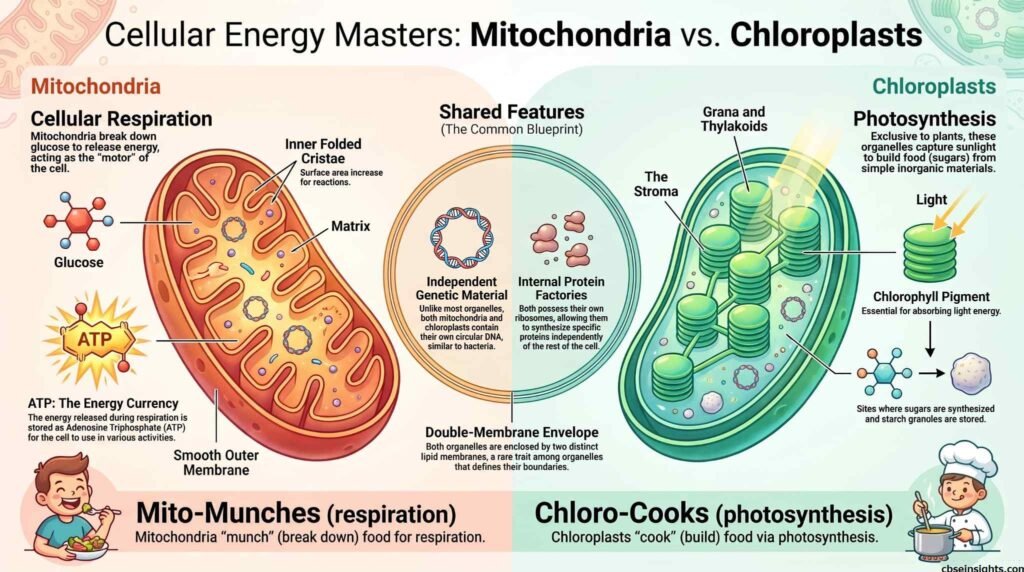
  • Supply ATP energy via cellular respiration.

  • Feature a highly folded inner membrane (cristae) and have their own DNA/ribosomes.

Plastids (Plant Organelles)

  • Chloroplasts: Contain green chlorophyll for photosynthesis; sugars stored in fluid stroma.

  • Chromoplasts: Yellow/orange/red pigments for fruits/flowers.

  • Leucoplasts: Colourless; store starch, oils, proteins.

Vacuoles

  • Storage sacs. Plant cells have one massive central vacuole (provides firmness); animal vacuoles are tiny.

Mitochondria vs. Chloroplast

  • Mitochondrion: Smooth Outer Membrane ➔ Finger-like Inner Folds (Cristae) ➔ Floating Ribosomes & DNA.

  • Chloroplast: Smooth Outer Membrane ➔ Stacks of Chlorophyll Discs ➔ Fluid Stroma ➔ Floating Ribosomes & DNA.

Cell Growth & Division

Why Cells Divide

  • For organism growth, to replace dead/damaged cells, and for reproduction.

Mitosis (Growth & Repair)

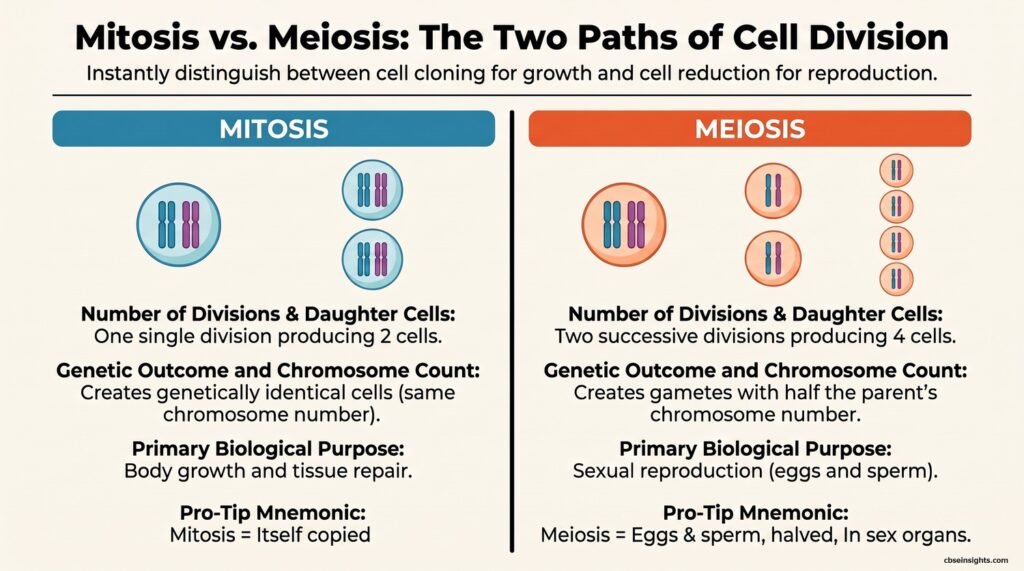
  • One parent cell divides once to produce two genetically identical daughter cells (same chromosome count).

Meiosis (Reproduction)

  • Occurs in reproductive organs to produce gametes.

  • A two-step division producing four daughter cells, each with half the original chromosomes (creates genetic diversity)

Mitosis vs. Meiosis Pathways

Mitosis Pathway:

Parent Cell (46 Chromosomes) ➔ Splits once ➔ Two Identical Daughter Cells (46 & 46).

Meiosis Pathway:

Parent Cell (46 Chromosomes) ➔ Splits ➔ Two Intermediate Cells (23 & 23) ➔ Splits again ➔ Four Gamete Cells (23, 23, 23, 23).

Internal Support & Cellular Lifespan

Internal Support Structures

  • Cytoskeleton: Fibrous network providing structural support and movement in eukaryotes.

  • Cell Inclusions: Stored non-living substances (e.g., starch, silica).

Lifespan, Cancer & Cell Death

  • Contact Inhibition: Normal animal cells stop dividing when touching neighbors.

  • Cancer: Abnormal cells lose contact inhibition, dividing uncontrollably to form tumours.

  • Programmed Cell Death (PCD): Genetically regulated cell destruction, vital for immunity and embryonic development.

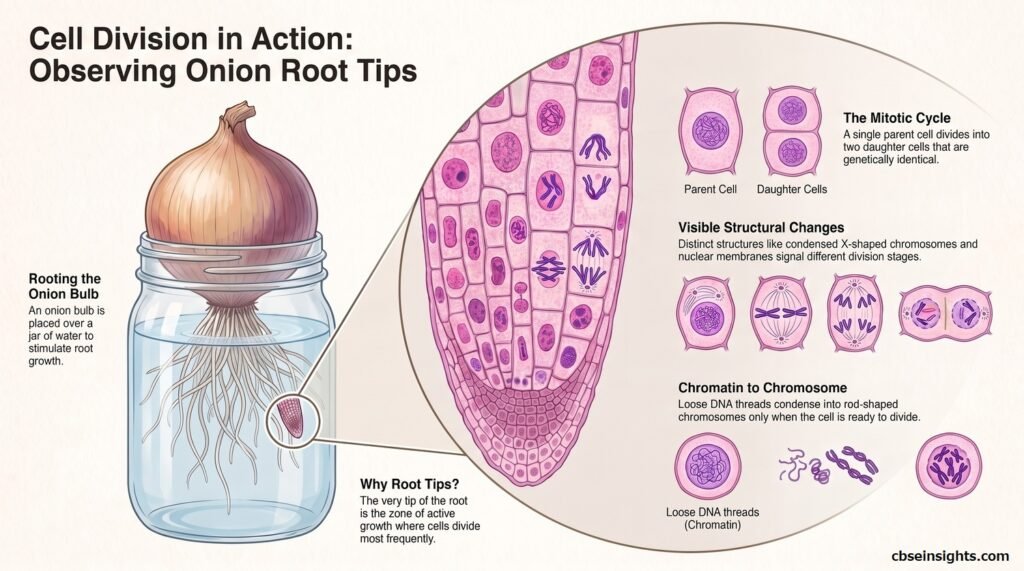
Observing Cell Division in Onion Root

  • Resting Cells: Box-like plant cell with a solid, perfectly round nucleus inside.

  • Dividing Cells: Box-like plant cell where the dark genetic material is being pulled apart to opposite ends of the cell.